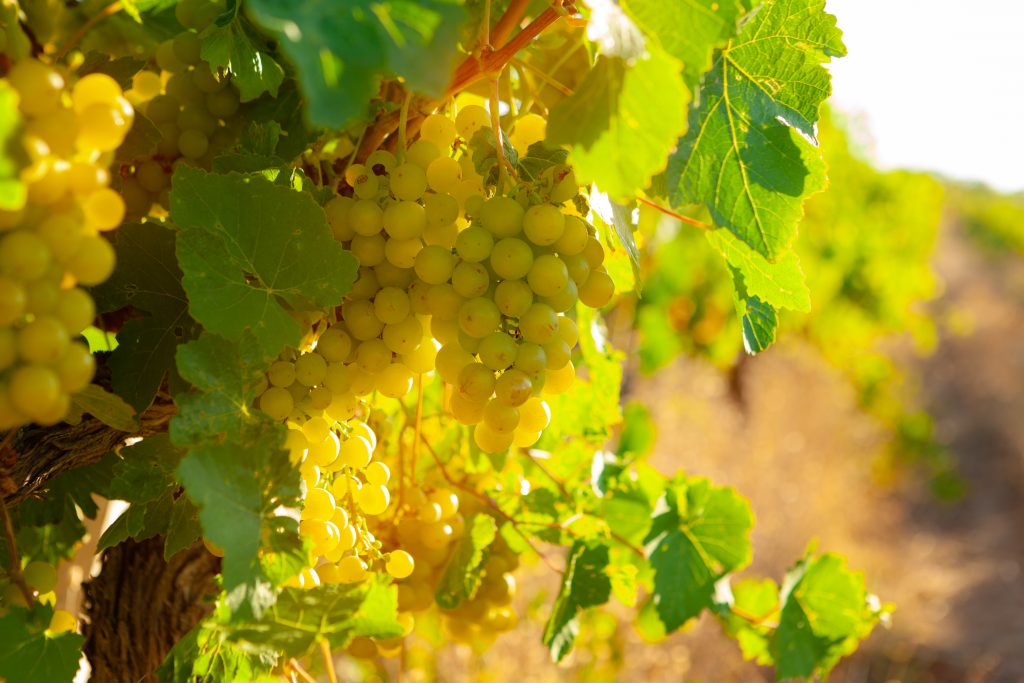
If there is one grape that deserves far more recognition than it gets, it is garnacha blanca. For decades it was confined to the warmest corners of the Penedès and southern Catalonia, blended into wines with no name of its own, considered too alcoholic for the styles of the time. That is changing. Producers who work at altitude, who delay the harvest and who plant in poor soils are discovering a variety capable of producing complex, full-bodied whites with a texture that few Mediterranean whites can match. This is the story of the forgotten grape of the Penedès and why it is worth knowing.
What garnacha blanca is and where it grows
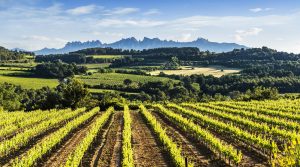
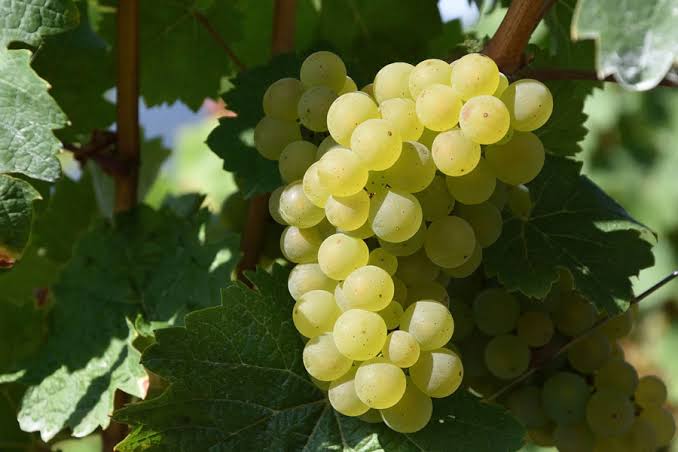
White garnacha is the white mutation of garnacha tinta, one of the most widely planted varieties in the western Mediterranean. It grows in the Penedès, the Priorat, the Terra Alta and the French Roussillon, always in warm and dry areas. It is a variety that needs heat to ripen well, which is why it was historically planted on the most sun-exposed slopes and in the poorest, most rocky soils of the garnacha blanca Penedès region.
Why is garnacha blanca challenging to work with?
The main challenge with garnacha blanca is its tendency to ripen very quickly and accumulate sugar easily. When the harvest comes late, the must is very sweet and the resulting wine can be heavy and alcoholic. For that reason, for a long time it was used for fortified wines and mistelas rather than table whites. However, in the hands of those who control the harvest date carefully and work with old vines on poor soils, it produces exactly the opposite: wines with body but fresh, with a surprising acidity for a warm-climate variety.
What soil does garnacha blanca need to give its best?
On limestone and poor soils, garnacha blanca naturally reduces its vigour. The roots go deeper in search of water, yields drop and the grapes develop more aromatic concentration. On fertile or irrigated soils, by contrast, the result is the opposite: large berries, little aroma and a lot of sugar. That is why the best garnacha blancas from the Penedès come from old, unirrigated vines in the most arid and elevated parts of the region.
How garnacha blanca smells and tastes
The most recognisable garnacha blanca characteristics are its texture and aromatic power. It is not a subtle variety. On the nose, it offers ripe stone fruit (peach, apricot), intense floral notes, sometimes rosemary and Mediterranean herbs, and in the best examples a mineral and saline layer that balances the richness of the fruit. With oak or bottle ageing, nuances of honey, beeswax and oriental spice appear, making the wine more complex and food-friendly.
How does garnacha blanca taste on the palate?
On the palate, garnacha blanca surprises with its body and texture. It is a wine with volume, almost unctuous in the best examples, but with an acidity that keeps it fresh and prevents it from feeling heavy. The finish is long and persistent, with a soft warmth that recalls its Mediterranean origin. It is the kind of white that works best at slightly higher temperatures than other whites, between twelve and fourteen degrees Celsius, so that its aromas can express themselves without losing freshness.
How is garnacha blanca different from xarel·lo?
If xarel·lo is the nervous and mineral white of the Penedès, garnacha blanca is the carnal and aromatic one. Both are Mediterranean, both are native and both age well, but they express the territory in completely different ways. Tasting them side by side is one of the best ways to understand the diversity of the Penedès. At our original tastings we regularly compare native varieties to show that contrast.
Garnacha blanca in Catalonia and beyond
The garnacha blanca wine has a much higher profile outside the Penedès than within it. In the Terra Alta, home to some of Catalonia’s oldest vines, it is the star variety and producers have been championing it for decades. In the Priorat it appears in many high-end whites blended with other varieties. And in the Roussillon, across the Pyrenees, it is the base for some of the world’s most valued natural sweet wines.
Is garnacha blanca making a comeback in the Penedès?
In the Penedès its recovery is more recent. During the cava boom, later-ripening varieties such as xarel·lo and macabeu were preferred, and garnacha blanca was pushed aside to isolated estates. Nevertheless, the growing interest in native varieties and characterful wines has brought a fresh look at this grape. Some Alt Penedès producers, especially in the highest altitude and most arid areas, are recovering old vines and making varietal wines that are beginning to attract attention beyond the region.
What food pairs well with garnacha blanca?
Garnacha blanca is a food wine in the most literal sense. Its body and texture make it perfect for soupy rice dishes, fish in sauce, white meats with vegetable sides and soft or semi-cured cheeses. It also works very well with pulse-based cooking and the spiced dishes of the eastern Mediterranean. It is a wine that needs food to show everything it has, and the food needs it to feel complete.
Why it deserves a place in your glass
Garnacha blanca is not easy to find as a varietal. Many producers use it in blends without mentioning it on the label, or use it for fortified wines that reach few consumers. However, when it appears alone in the bottle, well made, it is one of the most personal and unexpected whites in Spain.
Why does garnacha blanca have a future in the face of climate change?
Climate change is making varieties once considered too warm-climate now among the best adapted to increasingly hot and dry summers. Garnacha blanca, always accustomed to extreme conditions, has an advantage over varieties more sensitive to water stress. For that reason it is likely that in the coming years we will see more examples from the Penedès and more producers betting on it as an alternative to xarel·lo in the warmest plots.
How can I taste garnacha blanca from the Penedès?
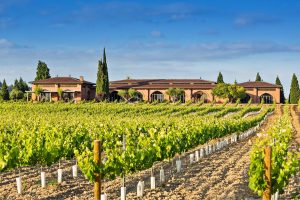
The best way to enter the world of garnacha blanca is, as always, through a guided tasting where someone can put what you are drinking into context. In our practical wine courses we spend time on the lesser-known varieties of the Penedès, with garnacha blanca as a perfect example of a recovered grape. And for those who want to try it in a more informal setting, a group tasting at the estate is always the perfect excuse to discover that the Penedès has much more to offer than cava and xarel·lo.