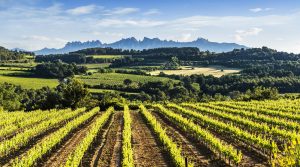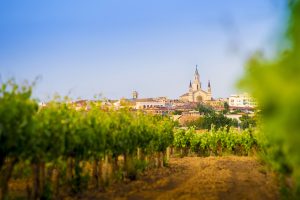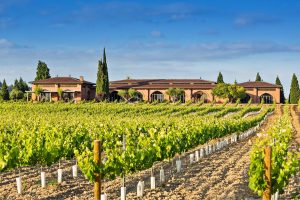
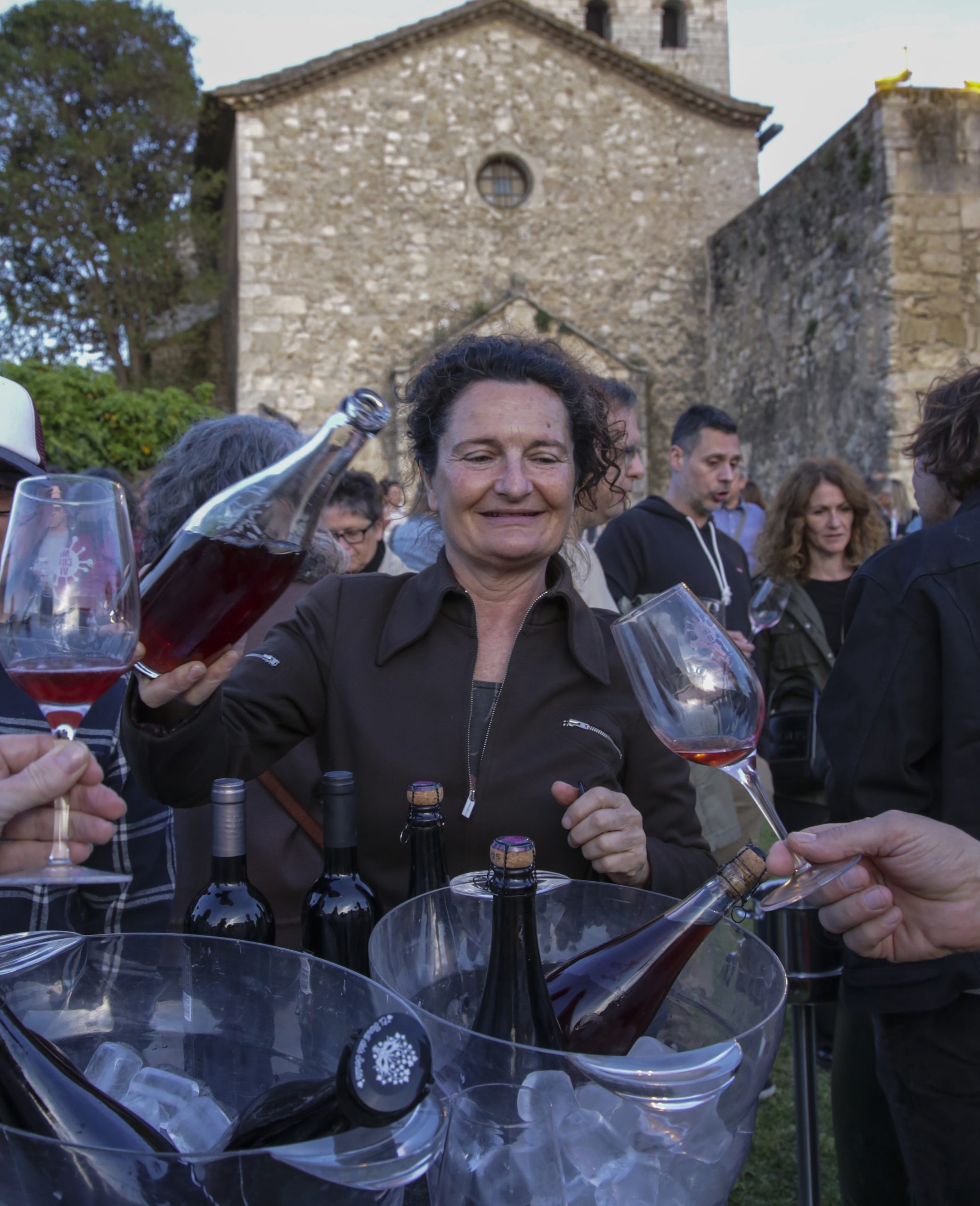
More and more labels carry the word organic. Some also say biodynamic. And many people read them as if they were synonyms. However, they are not. Biodynamic wine starts from organic farming but goes considerably further, and understanding it helps you know what you are buying and why it tastes the way it does. At El Jardí dels Sentits we have worked this way for years in our vineyards in Lavern, so we speak from experience. In this article we explain what each term means, what changes in the vineyard and the cellar and, above all, what you notice in the glass.
What is organic wine?
Let us start with the better-known term. An organic wine is one made from grapes grown according to European organic farming regulations. In other words, without synthetic pesticides, herbicides or chemical fertilisers.
In an organic vineyard, synthetic chemical products cannot be used against pests or fungal diseases. Instead, growers use sulphur, copper in limited doses and plant-based preparations. Herbicides are not allowed either, so grass is controlled mechanically or left to grow as a cover crop. In addition, in the cellar the list of permitted additives is shorter and the maximum dose of sulphites is lower than in conventional wine.
What does organic certification guarantee?
Organic certification is granted by an independent control body, in Catalonia the CCPAE, after a three-year conversion period and with annual inspections. For that reason, when a label carries the European green leaf, there is real oversight behind it. In our case, the estate’s grapes have been certified organic since 2014.
Nevertheless, organic does not necessarily mean natural or artisanal. An organic wine can be made on a large scale, with selected yeasts and modern technology. The certification speaks about what is not used in the vineyard, not about the producer’s philosophy. And this is where biodynamics comes in.
What does biodynamics add?
Biodynamic viticulture was born in 1924 from the lectures of the Austrian philosopher Rudolf Steiner. It starts from a simple idea: the estate is a living organism and must be cared for as a whole, not plot by plot.
The estate as an ecological organism
In practice, this means the vineyard is not seen in isolation. The cover crop, the insects, the surrounding trees, the animals and, of course, the soil all matter. The aim is for the estate to generate its own fertility and its own balance, without depending on external inputs. That is why compost is made on the estate itself, from pruning waste and organic matter matured on site.
Biodynamics uses nine preparations made from medicinal plants, minerals and manure. Some are added to the compost to guide its fermentation; others are sprayed on the vines or the soil in very small doses. The best known is preparation 500, cow manure buried in a horn over winter and then diluted in water stirred vigorously. It sounds strange, but those who practise it observe livelier soils and more resilient plants.
Finally, biodynamics takes into account the cycles of the moon and the planets when deciding when to prune, treat, harvest or bottle. It is, in fact, the aspect that generates the most debate. Even so, many growers apply it pragmatically: as a way of observing the vineyard more closely and intervening only when necessary.
What is the difference between organic and biodynamic wine?
To sum up, the difference between organic and biodynamic wine can be explained on three levels: what is avoided, what is done and what is certified. Here they agree. Neither organic nor biodynamic uses synthetic chemistry. In fact, every biodynamic wine is, by definition, organic. But not the other way round.
This is where the real difference lies. Organic farming replaces forbidden products with permitted ones. Biodynamics, by contrast, changes the way the estate is understood: it seeks autonomy, biodiversity and living soil, applies the preparations and follows the cycles. Consequently, it usually involves more manual work and lower yields. Moreover, in the cellar biodynamics tends towards minimal intervention: native yeasts, few additives and, often, no fining or filtering.
Organic certification is public and regulated by the European Union. Biodynamic certification, on the other hand, is granted by private associations, mainly Demeter. Many producers farm biodynamically without certifying, for reasons of cost or conviction. Therefore, if the label does not say so, the best way to find out is to ask the producer. And the best way to understand it is to see it: at our group tastings at the estate, the walk through the cover-cropped vineyard explains more than any definition.
What do you notice in the glass?
The question everyone ends up asking is whether a biodynamic wine Penedès producers make tastes different. The honest answer is that there is no biodynamic flavour, but there are traits that recur.
Living soil, with deep roots and no chemicals, tends to give grapes with more character of their own. That is why biodynamic wines tend to express terroir more clearly: in our case, the freshness and minerality of the limestone of Lavern. It shows especially in xarel·lo, which gains tension and depth.
Energy and drinkability
Those who regularly drink biodynamic wines speak of livelier wines, with more nerve and, at the same time, easier to drink. Part of that is due to minimal intervention in the cellar and the low dose of sulphites. Another part, probably, to the health of the grapes. Our Misteriós Xarel·lo is a good example: an ancestral-method sparkling wine, with no added sugar, direct and clean.
How to taste it with judgement?
The fairest way to compare is to taste a biodynamic wine alongside a conventional one of the same variety and region. The differences appear by themselves. If you want to do it with someone to guide you, our original tastings include that comparison. And for anyone who wants to understand viticulture from the inside, our practical wine course begins, precisely, in the vineyard. In short, biodynamic wine is neither a fashion nor a label: it is a way of farming that, when done well, shows in the glass.